
Change Management Without Chaos: Lessons from SAP Transformations

In large-scale SAP projects, success isn’t just about technology—it’s about alignment. The best transformations manage both the human and architectural sides of change, creating systems people trust and processes that scale. When structure and adoption move together, chaos never gets a foothold.
The Fear Behind Change
Change rarely fails because of technology—it fails because of uncertainty. Employees fear disruption, leaders fear wasted investment, and IT braces for instability.
In SAP transformations, that fear intensifies. Projects spend months perfecting integrations and data models, while the human and process sides of change get left behind.
A system can be technically “live” but functionally stalled if users don’t understand it, definitions don’t align, or teams don’t trust the output. The technology works—but the change doesn’t.
The Hidden Costs of Poor Change Management
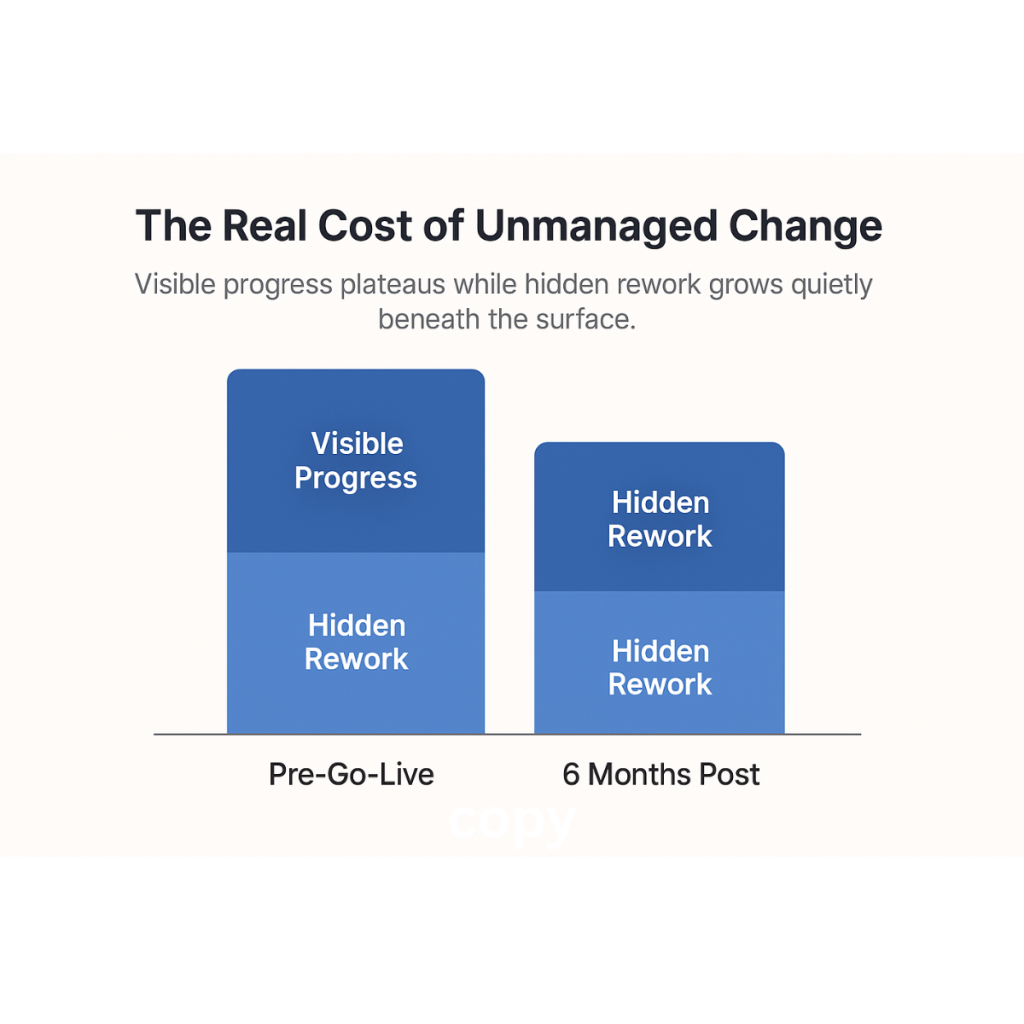
When change isn’t managed well, cracks form slowly. At first, everything looks like progress—systems launch, dashboards light up, and training boxes get checked. But under the surface, people quietly revert to old habits.
Finance rebuilds spreadsheets. Analysts create side databases. IT scrambles to patch avoidable issues.
These hidden costs grow until they erode trust and efficiency. Reporting slows, morale dips, and the new system becomes harder—not easier—to use. Once leadership loses faith in their data, the damage is both operational and cultural.
Building for Adoption, Not Just Implementation
The most effective transformations are designed for adoption from day one. That means mapping how people will actually use the system, embedding real-world training, and creating ownership instead of dependency.
At Prismatic, we co-design solutions with client teams so that IT, finance, and business users stay aligned on every definition and process.
When the system reflects how the business truly operates, adoption stops being a separate phase—it becomes a natural outcome of the build.
The Architecture Side of Change
Change management isn’t just about people—it’s about structure. SAP Datasphere and similar platforms give organizations flexibility, but without guardrails, that flexibility turns into fragility.
We’ve seen it happen countless times: environments blend, naming conventions get inconsistent, and responsibility lines blur.
What a structured approach looks like:
- Data flows are layered by purpose—inbound, harmonized, and reported.
- Separate environments for development, quality assurance, and production
- Clear role boundaries between engineers, analysts, and administrators
In Practice: Clorox’s Turnaround
During a global ERP migration, Clorox faced the familiar symptoms of unmanaged change. Reporting broke mid-transition, definitions drifted, and trust in the numbers evaporated. Six months of consulting support hadn’t solved it.
Prismatic was brought in to stabilize the system and restore confidence.
In just four weeks, the team:
- Reconciled over 200 KPIs to source data
- Eliminated 60 hours of manual stitching per close cycle
- Standardized metrics across teams
- Equipped Finance to manage and maintain their own reports
The outcome wasn’t just faster reporting—it was restored ownership and trust in the process itself.
Managing Both Sides of Change
Change succeeds when the people and architecture sides evolve together.
Training shouldn’t be an afterthought—it should be integrated into design. Architecture shouldn’t live in an IT silo—it should be structured so business users can sustain it.
When governance, communication, and system design are managed in sync, change stops feeling overwhelming and starts feeling productive.
Lessons for SAP Leaders
The most successful transformations aren’t the fastest—they’re the most disciplined. The teams that win define ownership early, separate their environments clearly, and keep communication alive long after go-live. These aren’t extra steps; they’re the foundation of trust, which is what ultimately powers every successful transformation.
Conclusion: Change Is Inevitable. Chaos Isn’t
Change will always bring discomfort—but that’s not the problem. The real danger lies in unmanaged change, when process, people, and structure drift apart.
Clorox’s turnaround shows how quickly chaos can be replaced by clarity when architecture and adoption
With the right structure, change stops being a risk and becomes a foundation for lasting progress.